News,May 2018

Cash Flow Forecasting

What is Cash Flow Forecasting? Process, Advantages

01/07/2021Business , Business Growth Ideas

Managing the financial affairs of a business can be overwhelming for many business owners. You don’t need to be an expert in accounting or bookkeeping, but you should at least have basic knowledge. One of the crucial components of finance is cash flow. So, you need to be well aware of cash flow forecasting to plan for the future growth of your business to keep it afloat. A cash flow forecast lets you know how much money your business is getting in and how much is going out. With this, you can make effective business decisions about what you can afford and how you can counter future cash flow problems. Need an accountant to manage your financial affairs, look no further other than CruseBurke! We provide tailored accounting and tax services for you at a reasonable price. Contact now! What is Cash Flow Forecasting? It is the process of forecasting or estimating the flow of cash that comes in and goes out from your business at a certain period. Besides, a cash flow forecast helps businesses to predict future cash positions, avoid cash shortages and get returns against the cash surpluses in the best way possible. Moreover, the finance team of the business bears the responsibility for forecasting the cash flow. However, the process requires input from the stakeholders and data sources within a company. Most often, large companies implement this process. How to Forecast Cash Flow? Forecasting the cash flow of a business depends on its objective, the requirements of the internal team or investors, and access to the data. Here is the general process that is recommended: 1) Know your business objective For an actionable cash flow forecast, you need to incorporate it with your business’ objective. Most commonly, it is used for: Managing the day-to-day cash Interest and debt reduction Forecasting future cash level Liquidity risk management Planning for business growth Save your time, money and energy by letting your financial affairs to CruseBurke. Feel free to reach out today! 2) Select a Forecasting Period After determining your business objective, you need to know what future period your forecast will cover. For accuracy, gather the maximum information from multiple sources where possible. For this reason, choosing a suitable period is crucial. Here is the list of some forecasting periods: Short-period forecasts Medium-period forecasts Long-period forecasts Mixed-period forecasts 3) Choose a Method for Forecasting There are two basic forecasting methods: direct and indirect. Direct forecasting uses actual flow data, whereas indirect forecasting uses projected balance sheets and income statements. 4) Gather the Data for your Cash Flow Forecast Find out the sources where you’ll get the data for your forecast. Generally, you can get the actual cash flow data from the bank account, where you’ll get data of account payables and receivables. In addition, you can take help from your accounting software to get the data. You should seek the following information from these sources: Opening cash balance for a specific forecasting period Cash inflows for the forecasting period Cash outflow for the forecasting period Advantages of Cash Flow Forecasting Along with avoiding cash shortages and getting more returns, a cash flow forecast can be advantageous for your business in many ways. Here is are some common advantages: Track your spendings Determine the future impact of plans and outcomes Keep track of overdue payments Plans for the cash shortages Manage surplus cash Help businesses to get out of debts Predictive business growth How We can Help CruseBurke has a team of accountants who can do cash flow forecasting for you. Moreover, we can provide you with a realistic picture of cash by letting you know about your current cash situation. We use modern software (e.g., Xero, QuickBooks) to generate accurate forecasts. We help you prepare for VAT bills and corporation tax deadlines. We support you in planning payroll or stock purchases in advance. Besides, we can help your business with future financial planning for a prosperous business future. CruseBurke offers affordable financial services! Get an instant quote today! Disclaimer: This blog provides general information on cash flow forecasts.

Read more
reasons your small business need accountants

3 Reasons Your Small Business Needs a Good Accountant

28/05/2021Accountants , Business Growth Ideas

To properly run a business, you’ll need a steady flow of records, reports, data, and other accurate reports, all reflecting your business’s assets and liabilities, debts, profit, and so much more. Numbers run your business, making accounting an important part of your operations. The numbers extracted from accounting activities support and guide the management of every business, which ensures that all business decisions are backed up with reasonable information, data, facts, and figures. Any action must be met with proof of growth or sustainability, as this is how businesses can survive. The importance of accounting in businesses is undeniable, but you’ll also need to ensure you get one crucial aspect right—hiring talented accountants. They can do more than just ease the workload burden. Their responsibilities lie in helping businesses reduce risks, comply with the law, manage growth, and of course, save on costs. Reasons Your Small Business Needs Accountants Before beginning your business venture, it’s first important to understand exactly how an accountant can help you. Expect them to benefit your business by doing the following: 1 – Helping you Comply with Year-End Tax Obligations The year-end tax obligations can be incredibly stressful, and this leads business owners to either pay more or pay less than what’s expected. Unfortunately, the latter leads to penalties and trouble with the HMRC. You’ll either be subjected to an investigation or be required to pay penalties, which can ultimately reflect poorly on your business. Accountants always remain aware of any tax law changes, however, and they help ensure that your expenses and allowances are calculated correctly. They can also legally reduce your tax bills with the help of tax-efficient strategies, ensuring that you avoid costly mistakes and at the same time, make more profit. 2 – Providing Sound Business Advice Seeing as they essentially handle your business’s financial health, good accountants can also serve as business advisers. They come with a plethora of knowledge, especially since they’ve worked with countless clients in various industries. Patterns of potential challenges can easily be identified, which then helps you overcome them early in your venture. Sound business advice also allows you to pursue growth opportunities, ensuring that your business sustains healthy growth and revenue for the years to come. 3 – Managing Your Business Growth As a business owner, you need to be prepared for instances of growth and expansion. Unfortunately, opportunities can come either too slow or too fast, which can lead to issues surrounding tax, employee benefits, office space, and even cash flow. Without proper management, your business can quickly suffer through unmanaged growth—propelling you back to square one. With the help of a good accountant, however, you’ll be able to react quickly and effectively. Doing so allows you to ensure that your growth means only one thing—an opportunity to get ahead. The Bottom Line Your business comes with different sets of needs and requirements, but a skilled accountant will help you overcome any issues that may arise. Your business’s financial health will be managed by knowledgeable and secure hands, making growth always attainable. In the end, your business’s growth and sustainability should always come first. For affordable accounting services in London, we’ve got you covered. CruseBurke is a part of a well-recognised accounting firm in the UK, ensuring that you have access to tailored accounting and taxation services for small and medium-sized businesses. Reach out to us to learn more! Disclaimer: The information about the reasons your small business needs accountants provided in this blog includes text and graphics of a general nature. It does not intend to disregard any of the professional advice.

Read more
zero-based-budgeting

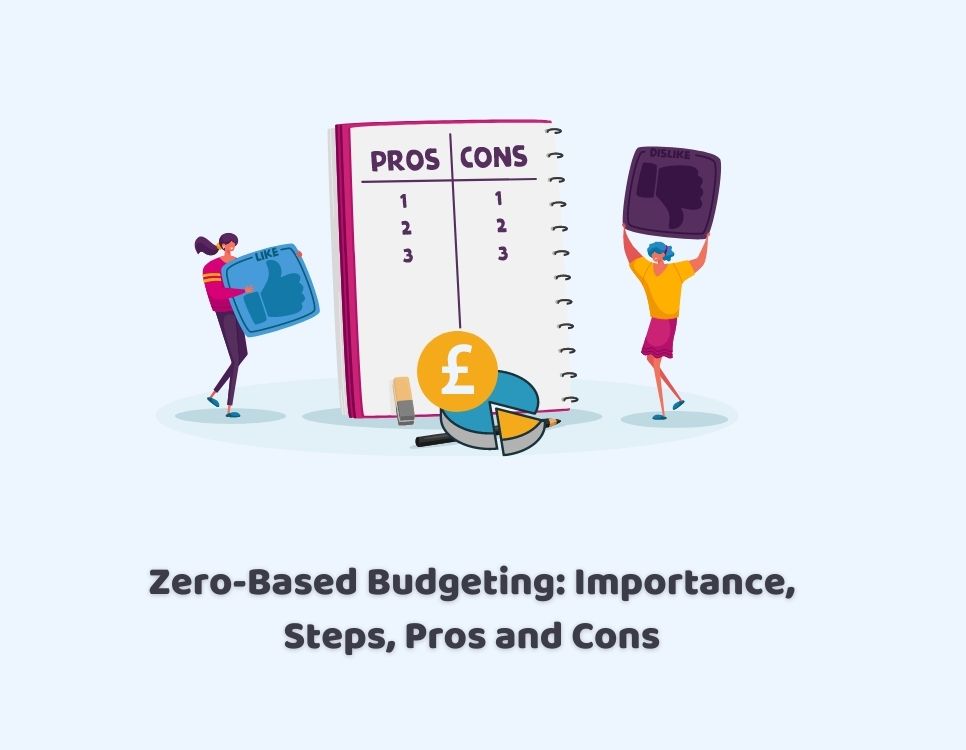
Zero-Based Budgeting: Importance, Steps, Pros and Cons

26/05/2021Budgets & Other , Business Growth Ideas

Zero Based Budgeting is a technique used in budgeting that involves preparing the budget from zero base. This method helps companies to align their spending with the company’s goals. Management prepares a budget from scratch that only includes essential expenses and operations to verify that all the components of the annual budget are cost-effective, relevant, and helpful to increase savings. This budgeting method is used for providing a purpose for every cent used in a business. Here all expenses must be justified to be placed into the budget. For instance, if a business is expecting £20,000 in wages and salaries, and believes that it is necessary for the smooth operation of the business. Then, it needs to be included in the budget. However, the allotment of salary of each employee needs to be examined and justified for including it into the zero-based budget. Learn more about why budgeting is necessary for your business! Comparison of Zero Based Budgeting with Traditional Budgeting: Businesses use budgets to keep track of their expenses and to reduce cost and to increase profit. Generally, budget planning is based on the budget of the previous year, as with traditional budgeting. The traditional budgeting method uses a percentage to meet new goals. This percentage generally lies between 1% to 10%. Sometimes the budget may be affected by the market and other external factors and may show great upper or lower costs. In such a case, you cannot rely on the previous budget due to the significant change. Therefore, you need to make the entire budget from scratch and it can be done with zero-based budgeting. Here the company analyzes every expense separately from the start and examines all expenses. Whereas, traditional budgeting only uses proposed new expenses.   Zero-Based Budgeting Advantages and Disadvantages: Here are the advantages and disadvantages of zero-based budgeting: Advantages: Here are some of the useful aspects of ZBB: Well-justified output More Accurate and efficient Reduces redundant activities and costs Increases collaboration Need help! Reach out to our professionals! Disadvantages: Before implementing ZBB, you need to consider its cons: Time-consuming and costly May harm company’s image Requires more manpower More complex than traditional budgeting How to do Zero Based Budgeting? Businesses can apply their own unique approach, however, here are the basis for implementing ZBB: Start from Zero. Prepare a new budget from scratch without using the previous one. Examine your cost areas and reduce unnecessary activities involved Justify all the components involved in the budget. Find cost-effective and relevant areas Streamline what activities your business should perform and how. Automate the processes Execute the activities of implementation. Discuss clear plan and roles Quick Sum Up: Now that you know the importance and procedure of zero based budgeting, you can give it a shot. If it doesn’t suit your business needs, you should try another method of budgeting. Still, if you are facing any difficulty, you can get reach out to experts for help. Contact our qualified accountants to prepare a zero-based budget for you! Disclaimer: This blog provides general information on zero-based budgeting.

Read more
how to value a business

How Do You Value a Business Based on Turnover?

08/04/2021Business Growth Ideas

When it comes to valuing a business, the first thing most people think about is profit. But what if I told you that turnover, or revenue, can be just as important in assessing a business’s worth? It’s often the first number you’ll come across in a business’s financials, and it can reveal a lot about the company’s market position. Understanding how turnover plays a role in business valuation is key, especially if you’re looking to buy, sell, or just get a clearer picture of a company’s financial health. While turnover doesn’t tell you the full story (after all, profit is king), it gives you a solid starting point to dive deeper into the business’s performance. So, how do you use turnover to value a business? It’s not as complicated as it sounds! Let’s break it down and explore how this number can help you make smarter decisions. Ask an accountant to calculate your business worth! In this blog, we’ll only talk about how to value a business based on its turnover. What is Turnover? Turnover is the total value of sales a business makes by its core operations over a specific period of time, before deducting any expenses or VAT. When is Turnover Valuation Appropriate? Turnover valuation is appropriate for a quick, and approximate valuation, especially for a new, retail-style business or within high-volume industries where a standard industry multiple applies. It is also important for the new businesses that lack detailed accounts or to provide a quick overview of a business’s popularity and sales performance. What is a Business Valuation? Business Valuation is the systematic process of calculating a business’s value by analysing its assets, earnings and marketing position. There are various methods to calculate the value of the business, each offering a different perspective of its worth. Whichever provides better for the company’s financial performance and serves the purpose of valuation is the most suitable one. Importance of Business Valuation Business valuation is an important aspect as it provides a comprehensive assessment of a company’s market worth and financial health. It is used when a business is looking to raise investment. It is a strategic tool used for major business decisions, securing funds or navigating mergers and acquisitions. It can be used for securing funding to attract investors, justifying financing terms and building confidence. Is Valuation Based on Turnover a Good Value Indicator? Yes, Valuation based on turnover is an easy and useful indicator for businesses with simple operations and a brief trading history. However,  it says very little about the important financial factors like expenditures, finances and investments. Still it should be used as a quick estimate or other methods for an accurate and detailed valuation. Turnover valuation can be useful because: It provides quick estimates or is often referred to as the “rule of thumb”. For new startups or businesses that have a short trading history, it can be a practical starting point when full accounts are not available. It works in specific industries like high street retail, where the cost structures are similar and turnover can be a reasonable indicator of the popularity of the product and its sales volume. A higher turnover can serve as a market share proxy. How to Value a Business Based On Turnover? By valuing our business, we can explain and get to know its financial status, by which we make better decisions for our business in the future. There are various methods to value a business based on turnover. Some of them are explained below: 1. Times-Revenue Method It is a market-based valuation approach that estimates a business’s value using its sales or turnover. It can be calculated using your company’s annual turnover and an industry revenue multiple. It is mostly used for new companies that have a top-line revenue but are not consistently profitable. 2. Industry Rules Of Thumb Similar to the times-revenue method, but is more sector-specific, this method involves using established formulas based on a specific percentage of annual or weekly revenue. It is typically used for smaller businesses who have short-term goals such as retail stores or cafes. 3. Earnings Multiple Method (EBITDA) This method is not directly based on turnover, it is used to determine a company’s enterprise value relative to its peers. It is also a core indicator of profitability and the operational cashflow of the business. It is mostly used for valuing profitable small and medium-sized businesses. Limitations Of Turnover-Based Valuation Turnover-Based Valuation also known as “Times-Revenue Method” has various limitations due to failing to account for a business’s expenditures, profitability and future reach Even though it is a simple and quick method, it can still provide inaccurate and misleading representation of a company’s true value. Following are some core limitations of turnover-based valuation: 1. Ignoring Profitability One of the most critical flaws of turnover-based valuation is that it completely overlooks a company’s costs and net income. A high revenue business could still be losing money, if its costs are higher or having low profit margins. 2. Ignoring Necessary Aspects If the firm only focuses on the top-line revenue, this method tends to ignore the other crucial aspects of financial health like assets, liabilities, etc. Without them, it is difficult to understand a company’s financial position. 3. Vulnerability To Market Fluctuations The various multipliers used in these turnover-based valuations are based on market trends and conditions which can be unstable. This can make the valuation sensitive to economic uncertainty and industrial changes. 4. Ignoring Future Potential The valuation based on the historical turnover is retrospective and provides no insight into the company’s prospects for future growth and profitability. This approach can undervalue the business with high growth potential significantly. What Are The Other Ways To Calculate The Value of Your Business? The value of a business can be determined by using different valuation methods, as it is looking to raise investment for a business. They are explained below: 1. Asset-Based Valuation This approach helps value a business by assessing the fair …

Read more
how to set smart goals

How to Define Smart Goals for your Brand?

17/03/2021Business Growth Ideas

You’re just starting out your own company, and need a helping hand to determine the SMART goals for your brand. We’re addressing small businesses because it’s good to have SMART goals for your brand the moment you’re starting out on your venture. Gives you clarity on what you’re trying to achieve. We’ve seen different businesses not going anywhere just because they’ve not defined SMART goals for their business. Setting SMART goals definitely mean you can focus your efforts, use time and resources properly, and improve your chances of what you want to achieve in your life. Let’s expand more on what SMART goals are all about. What are SMART Goals? SMART is, basically, an acronym for : Specific (should make sense) Measurable (must have some meaning attached to them) Achievable (agreed, attainable) Relevant  (realistic and result-based) Time-bound (time-based and time-sensitive) Some Benefits of Having SMART Goals SMART is one of the most effective tools that help you out with the clarity, focus, and motivation you need to achieve your goals. SMART goals can be used by anyone, anywhere without the help of specialist tools or any training. Apply SMART goals for your Business You’ve set a goal for your business. Great! Now it’s time to set up a system for your business too. Let’s talk about some defined systems. You’ve just started writing a book, you want to get it done maximum by one year. So what will be your approach to get this done on time? Take it slow. One step at a time. Try writing 250 words per day. If you’re consistent with these words, you’ll have 60,000 words in a year. This sums up to a 200-page paperback with 1.5 spacing. Since we started out this blog by addressing small business owners, having a system and working according to that system primarily helps these business owners. If you’ve got a sales goal, all you need is 10 quotes per month with a 50% success rate. Are you in desperate need of a system to help you achieve your SMART goals? How about a quick call with our accountants who’ve been helping businesses achieve their goals? Disclaimer: The information about how to set smart goals provided in this blog includes text and graphics of general nature. It does not intend to disregard any of the professional advice.

Read more
how does tax affect a business

Find Out How Does Tax Affect a Business?

11/03/2021Accountants , Accounting Issues , Business Growth Ideas

How Does Tax Affect a Business? Taxes may affect your business on a sectoral basis and government legislation. Whichever sector you are working in, you should make sure to know about your tax obligations. There are various ways to reduce tax costs. In this blog, we are going to discuss how does tax affect a business? If you are an employee, your taxes are automatically deducted from your gross salary. However, if you’re a business owner, it is imperative to pay taxes levied on you by the state.   Key Business Taxes to Pay: Environmental taxes affect almost all businesses but have a major impact on those businesses which are directly involved with them. These include power companies, airlines, quarries, landfill operators, and aggregate importers. The businesses dealing with alcohol, tobacco, oils, and gambling have to pay excise duty. Likewise, those businesses who are related to import and export may also be affected by excise duty or customs duty. Similarly, financial taxes affect banks and financial institutions. The taxes may vary in accordance with their responsibility and size. In addition, insurers and insurance companies have to register and pay insurance premium tax.   Do Businesses pay Tax? If your company is making a profit, a corporate tax or business tax is levied on it. It works the same as income tax, but it is only for businesses who start making profits and they have to pay a business tax at a certain rate. Business tax affects your business cost. If your corporation tax is rising, it means that your total cost is increasing simultaneously. It can cause price hikes within the business. Does Interest Rate Affect Business? In the UK, the Monetary Policy Committee works under government supervision to determine the level of interest rates. The rise in interest rate could increase the cost of businesses’ borrowed money. Consequently, the buying power of consumers declines which lead to a fall in business sales. The government’s spending priorities also affect businesses. So, if a government spends money on schools, the subsidiary industries related to schools will start growing and earning. In addition, the government also provides subsidies for companies. For instance, the government provides employment subsidies to reduce unemployment. These subsidies encourage businesses to grow.   Understanding Taxes in your Sector: For a general understanding, if you’re a UK citizen you can visit the HMRC website or your respective government’s site to know the tax implications related to your sector. However, your accountant would be the best source for understanding taxes in your sector. As accountants, working on taxation, are well-versed with sectoral tax issues and other legal obligations related to it. There are other sources too, as local business support organizations and trade associations, though they are not as expert as accountants.   Conclusion: We do hope that you have understood how does tax affect a business? If you are looking for the professional services of an accountant to solve your taxation issues, Cruseburke is here for your help. We’re an accountancy firm in London working for the financial growth of individuals, contractors, businesses, and landowners. You can leave your query here!

Read more
business survival strategies

What are the Business Tips that Work in 2025?

18/02/2021Budgets & Other , Business Growth Ideas

The economic climate has seen significant shifts since the pandemic, but the aftershocks are still being felt by many businesses. While the UK economy is gradually stabilising, business owners must remain proactive and strategic to stay resilient. Here are three practical survival strategies to help your business thrive in 2025 and beyond: 1. Always Explore Funding Options Access to finance remains crucial. Beyond traditional business loans, make sure you explore every possible funding route: Government-backed finance: Schemes like the Recovery Loan Scheme (RLS) are available to eligible businesses needing support with cash flow, investment, or growth. Local grants and support programmes: Councils and regional growth hubs often offer sector-specific grants and innovation funding. Private lending and angel investors: These can be viable if you’re looking to scale or diversify. Stay informed about current financial support schemes via the UK Government finance support page. 2. Have a Flexible Back-Up Plan Even in a recovering economy, unexpected changes can derail growth plans. Whether it’s supply chain disruption, market competition, or changes in consumer behaviour, it’s crucial to have contingency plans in place. Consider these steps: Build a cash reserve to cushion against lean periods. Diversify your revenue streams to reduce dependency on one product or service. Use scenario planning to evaluate the impact of best- and worst-case outcomes. Planning ahead allows you to pivot quickly and keep your business steady during uncertainty. 3. Get Strategic Support from an Accountant A modern accountant does more than just crunch numbers. In 2025, your accountant should be your strategic partner. They can help with: Cash flow management Financial forecasting Tax planning Cost efficiency reviews Digital transformation (including MTD compliance) An experienced accountant will give you a clearer picture of your business’s health and guide you in making informed decisions to improve profitability and resilience. Final Thoughts Business survival in today’s climate isn’t just about hanging on—it’s about evolving. With the right funding, contingency planning, and expert support, your business can not only survive but grow stronger. If you need help navigating your options, speak to an accountant who understands your industry and can provide tailored advice. Disclaimer: The information about the business survival strategies provided in this blog includes text and graphics of general nature. It does not intend to disregard any of the professional advice.

Read more

Here’s Our 101 on Dealing with Awkward Customers

12/02/2021Business Growth Ideas , Marketing Tips

Going up to people and talking can really be nerve-wracking for some people and while it is hard for them it also puts the other person under pressure on how to make the other person calm and talk. It is kind of a sticky situation. Then there are some who just have no control over themselves and can be the rudest even with them you need to know how to tackle the situation before it escalates. But you can handle a conversation like a pro with awkward customers. It does not have to be as hard as you imagine it to be. So, are you buckled up to know how to deal with awkward customers? Because we are ready to take you out of this misery! Ask and listen An indecisive customer might just test your patience and where they are genuinely confused does not give them the right to keep pressing your buttons till you snap. So, here is what you do, you hear them out since they are unable to communicate their concerns. Question specific inquiries about probably the most well-known variables that sway dynamic, including features and cost. Above all, hear their interests with care. Acknowledge their feelings and complaints We all want our feelings to be heard and acknowledged the same is the case with your customers. If you come across a customer with a complaint let them tell you and then you give them a solution, do not interrupt them in between. This puts you on the client’s side and makes it more uncertain that they will be angry with you. It likewise gives you more opportunity to consider how you will react.  Don’t do filter listening, don’t guess instead hear them out and only when you understand the problem that’s when you respond. Do not cut them in between or just start giving irrelevant suggestions. Don’t get defensive This is the worst you can do, there isn’t anything so irritating as somebody who is rationalizing. Try not to do it. Your client presumably doesn’t mind why something turned out badly, or whose flaw it was, they simply need you to put it right. Focus on the most proficient method to improve the circumstance, as opposed to clarifying it. Don’t take it personally Critical clients can be a tremendous test. They appear to know everything and are extremely incredulous of your proposals. Be understanding and mindful. Try not to take anything personally. Utilise explaining proclamations, weaving in new data and thoughts regarding the result of which they are being critical. Give words you can keep It tends to be enticing to promise the world, just to prevent your client from yelling at you. It is, nonetheless, going to exacerbate things on the off chance that you, at that point need to backtrack and clarify that, really, you have no ability to convey what they are asking for. Just guarantee what you can really convey. Disclaimer: The information about dealing with awkward customers provided in this blog includes text and graphics of general nature. It does not intend to disregard any of the professional advice.

Read more
winning back lost customers

How to Win Old Customers Back

09/02/2021Business Growth Ideas , Marketing Tips

It is cheaper to retain customers than it is to find new ones. Hold on to your clients and make sure not to let them go (unless they are a nuisance). If you have let them go and are in to winning back lost customers then keep reading. With a little help from marketing, you can make specific campaigns, and strategies that target lost clients and subtly convince them to come back to your business and shop. Sounds like a plan doesn’t it? With old clients, you don’t have to tell them about your business because they already know, however, you do need to find out why they stopped giving you business was it because a competitor gave them a better option or was it because you failed to deliver? Once you crack the code let’s focus on what to do next   Reach Out A loyal customer left your side, wouldn’t you want to know why? Reach out to your customers and ask them what made them switch to another brand. Let the former customers know that you want to know why you lost them. Many even leave because the company never tells them that they are valuable to them, so take the first step; reach out, ask and tell them they are important to the business. Such personal gestures go a long way.   Own Up Got to the bottom of the cause? Take responsibility for your actions and own up to any mishap you might have done. Don’t be defensive or don’t start an argument instead discuss it out. Guarantee them that the situation in question will not happen again and make sure that it does not repeat.   Reason to Come Back You are on your way to winning back lost customers but why should your old clients give you another chance? You need to be bringing something more to the table. In the event that clients have wandered, give them the motivation to return. Nothing tempts individuals to purchase like a good deal, so consider giving inert clients an extraordinary rebate. You can send this mission straightforwardly to dormant clients. Since you’re portioning your crowd, you can customize the directive for this particular gathering. For instance, send an advancement through instant message or email that says, “We Miss You. Come in this week for 50% off of your entire bill.” Once they come and utilise your services or items make sure everything is up to standard so they have no other option but to come back for more.   Use the Savvy Social Media Address common complaints through a social media crusade. Suppose clients are troubled by expanding costs, or a menu item vanishing. Utilise that input to offer some kind of reparation and win back clients on social media. Dispatch a client appreciation day that gives clients an extraordinary coupon, or run a challenge requesting that clients vote in favour of one menu thing that you’ll bring back. This is the most efficient way as everyone knows how much social media is trending in today’s time. Old customers are your loyal customers if they go away from you that means something is not right and you need to right away address the elephant in the room before it gets too late.Winning back lost customers can be a lot easier if you follow what we just told you.

Read more
Budgeting your company

Budgeting for your Company- What Works and What Doesn’t Work Best?

27/01/2021Budgets & Other , Business Growth Ideas

It cannot be emphasised enough how important budgeting is for your business. You don’t require any budgeting company to help you out on this, budgeting can be done very easily if you have the right guidance and assistance. What is the budget? A budget is an estimate of revenue and expenditures for a given future period of time and is typically collected on a periodic basis and re-evaluated. Some businesses come up short in the primary year of trading on the grounds as they are uncertain about cashflow and budgeting. Another issue a few organisations face is that they have sufficient money yet are apportioning it to all some wrong spots, which means it is being utilized ineffectively and not working for the business. In another company, planning what to spend and where can be precarious where you have no proof of what works and what doesn’t. How might you plan and budget when you don’t practically have the foggiest idea what’s in store for your cash? The budgeting process for a company is a cycle whereby future pay and expenditure are chosen to smooth out the consumption cycle. Other significant exercises in the budgeting process incorporate things, for example, forecasting, monitoring, controlling and assessing the financial objectives. Still, wondering why is budgeting important for a company? Keep reading as we tell you the advantages of budgeting with what works and what doesn’t. Be strategic While some business start with nothing with expectations of developing, others start with speculation and desire to make all the difference. Arrange what to budget and where to be precarious in another business where you don’t have proof of what works and what doesn’t. The answer for this is straightforward – you need to prepare and strategise. Take a gander at the long haul and don’t get excessively energized when any speculation cash hits your bank. Think in the long term and how the cash can be used wisely. Don’t underestimate the initial start-up expenses. The company has started and has clients on the books with whom it takes care of work, this is a good start. The organisation pays out on items such as machinery and staffing. And cash from the job it does cannot reach the bank for at least  30 – 90 days from the date of completion of the work. If the organisation does not have a timely client? Will it actually have the option to endure? What new entrepreneurs need to think about is the way that any instalments coming into the business might be far off yet. So, they’re supposed to budget for the main things and stick to any spending, so they don’t blow through all the money inside the business. Design out carefully, and search for extra venture if necessary. It’s acceptable if the business has high expectations of having customers paying when expected however you should, in any case, pray fervently yet plan for the most exceedingly terrible. Ongoing costs Do you realize what amount of cash is required on a month-to-month basis to make a big difference for your business? This is a region that a few organisations flop on. They figure out how to factor in the enormous costs, for example, lease and staff compensation, yet can disregard things like the telephone line, broadband, protection and fixed. These little expenses can long add up. This risk can be limited with cautious arranging, investigate everything in your business and all that you want to achieve, what expenses are included; can any of these be diminished? Have you considered every single detail and cost? Possibility plan How might you cope if something turned out badly? It appears to be rapid and truly developing at the moment you start a company. However, what occurs if your image doesn’t take off or a customer chooses not to utilise your administrations and go somewhere else? Your business needs to have plans set up for if the sudden occurs, for example, an issue in one of your items meaning it will require a further turn of events. There are just two ways that you can plan for this: Give your customer realistic time spans – additionally, attempt to consider any issues with the item/administration which could postpone it Give reasonable expectations to your customer – do not guarantee the world for them and convey a stone. In addition, consider placing some disaster cash aside in the organisation so that if anything does not turn out as you might hope, you can dive into it. Budgeting your company would definitely benefit your company and we are just a message away if you need any help!

Read more