
To keep your healthcare business healthy, you need to master the flow of money, which basically boils down to accounts payable and receivable.
In simple terms, accounts payable is the money you owe to others, like your medical suppliers or the landlord. On the other hand, accounts receivable is the money owed to you, whether from the NHS, private insurance providers, or patients paying directly.
This guide will cover everything you need to know about accounts payable and receivable, including:
- What are accounts payable and receivable?
- How do accounts payable and receivable show in the financial statements?
- How often should a clinic review its accounts payable and accounts receivable?
- And much more…
Let’s break it down!
What Are Accounts Payable and Receivable?
Accounts payable and receivable refer to money that is due but not yet paid.
- Accounts payable (AP): Money your practice or clinic owes to suppliers and other creditors.
- Accounts receivable (AR): Money owed to your practice or clinic by patients, insurers, commissioners, or other organisations.
Think of it this way: AP is money “going out soon” while AR is money “coming in soon”.
Accounts Payable vs Accounts Receivable: Key Differences
As discussed above, accounts payable and receivable represent short‑term amounts that are due but not yet paid. You will see both on your balance sheet.
Accounts payable sits under current liabilities, while accounts receivable sit under current assets. Together, they form a core part of your working capital. Therefore, they have a direct impact on day‑to‑day cash flow.
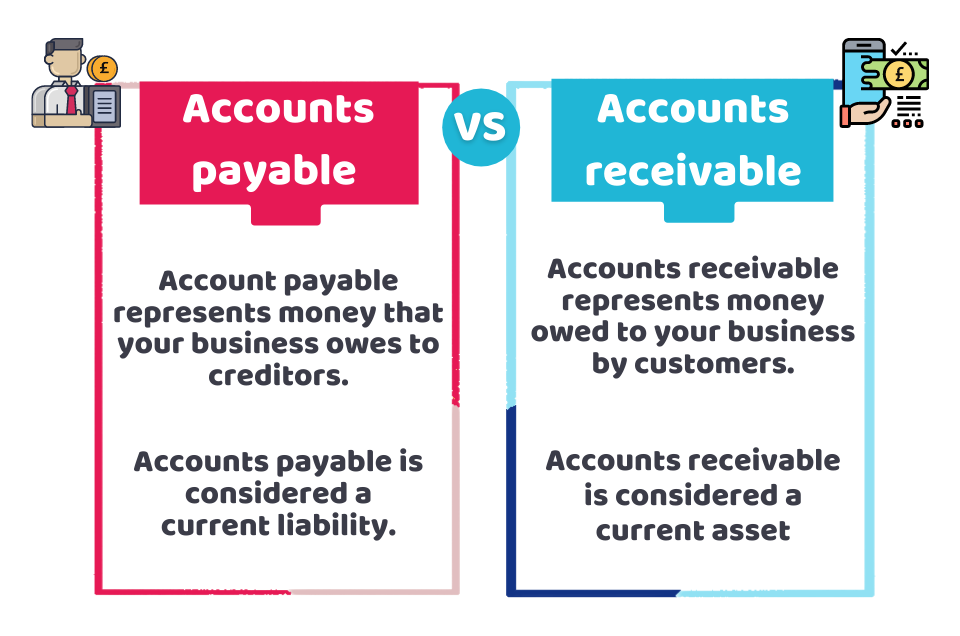
| Aspect | Accounts Payable | Accounts Receivable |
| Definition | Money you owe suppliers | Money owed to you |
| Impact | Cash going out | Cash coming in |
| Example | Paying for medical supplies | Receiving payment from the insurer |
| Risk | Late payments harm supplier trust | Delayed receivables harm cash flow |
How Does Accounts Payable Work in a Healthcare Setting?
Your tracking of accounts payable and receivable needs to be precise. On the payable side, you are dealing with everyone you buy from. This includes:
- Wholesale medical suppliers for bandages, syringes, and PPE.
- The cleaning company that keeps your surgery sterile.
- Software providers for your patient booking systems.
- Freelance locums or nursing agencies.
When a supplier sends you an invoice, it is recorded in your system as a liability. You have a legal duty to pay this within the agreed terms, typically 30 days.
Letting this pile up means you risk damaging your credit reputation with suppliers. This can lead to serious issues if you suddenly need an emergency order of supplies.
How Does Accounts Receivable Work for a Medical Practice?
This is usually the more complex side of the accounts for any UK clinic. In many businesses, transactions are completed instantly, such as buying a coffee. In healthcare, there is often a long wait between seeing a patient and getting the cash.
Your accounts receivable list will be full of “third-party payers” like:
- If you have a contract for specific services, you might wait weeks for the payout.
- Companies like Bupa or AXA have their own processing times for claims.
- People who had a consultation but haven’t settled the bill yet.
When you complete a procedure, you record the income as accounts receivable. It stays there as an asset until the money actually hits your bank. Because insurance companies can be slow to pay, this side of your accounts may appear strong even if you are short on cash.
How Do Accounts Payable and Receivable Show in Financial Statements?
You will usually see:
- Accounts payable under “current liabilities” on the balance sheet.
- Accounts receivable under “current assets” on the balance sheet.
The profit and loss account shows income and expenses, not the timing of cash movements. Changes in accounts payable and receivable help you understand why profit and cash may not match in a period.
Example:
- You make £50,000 in sales in a month, all on 30‑day terms.
- You only collect £20,000 of that in cash in the month.
- On paper, income is £50,000, but accounts receivable have increased by £30,000, and your bank balance only reflects the £20,000 collected.
The reverse applies on the payable side when you receive but do not yet pay invoices.
Is Accounts Payable a Debit or a Credit in My Books?
On the balance sheet, accounts payable and accounts receivable appear on opposite sides. Accounts payable is a credit because it is a liability; it is money you owe to others. Accounts receivable is a debit because it is an asset; it represents value owned by your clinic. This can be confusing, which is why most modern healthcare accounting software handles much of the process for you.
What Is the Best Way to Record Accounts Receivable and Payable?
To keep your accounts payable and accounts receivable records accurate, the best approach is to use cloud‑based accounting software such as Xero or QuickBooks. These systems connect directly with your bank and can integrate with medical booking platforms. As a result, invoices and payments are tracked automatically. That means less manual entry and a clearer view of cash flow.
Alongside the software, it’s important to set simple internal routines.
Record invoices as soon as they arrive, match payments quickly, and run aged receivables reports. This helps identify overdue accounts. For payables, set reminders so that supplier deadlines aren’t missed.
In short, when you combine technology with consistent habits, you can keep your accounts accurate and avoid the stress of chasing (or being chased for) payments.
Can Software Fully Automate Accounts Payable and Receivable?
Software can automate many tasks, such as capturing bills, issuing invoices, sending reminders, and matching payments. However, it still needs someone to:
- Review exceptions and unusual items.
- Make judgment calls on disputes and write‑offs.
- Maintain relationships with key suppliers and customers.
So, think of it as support rather than a complete replacement.
Why Is It So Important to Track Accounts Receivable and Payable Together?
If you only focus on one side, you may get a false sense of security. You might see £40,000 in your bank account and think you are doing great. However, if your report shows that you owe £35,000 to suppliers next week, but you aren’t due to receive any insurance payments for another month, you may face a cash flow shortage.
If you monitor accounts payable and accounts receivable together, you can predict these “dry spells.” At CruseBurke, we help clinic owners set up systems that flag when payables are getting too high compared to the cash actually coming in.
How Do Accounts Payable and Receivable Impact Your Practice Cash Flow?
Cash flow is the lifeblood of your clinic. You could technically appear “profitable” on paper. But if your accounts payable and receivable are out of sync, you could still run out of cash.
For example, if you have to pay your staff and suppliers every 30 days (Accounts Payable), but the NHS or insurance firms take 60 days to pay you (Accounts Receivable), you have a 30-day “black hole.”
What Happens if I Never Collect an Account Receivable?
Sometimes, a patient simply won’t pay, or a small insurance claim gets rejected and isn’t worth fighting. This is known as bad debt. You eventually have to write it off. It means you remove it from your list of expected income and accept the loss.
There can also be VAT implications. This depends on how the original sale was treated and how long the debt has been outstanding. You can usually only claim VAT Bad Debt Relief if the debt has been outstanding for at least six months.
How Often Should a Clinic Review Its Accounts Payable and Accounts Receivable?
At the very least, you should be checking these once a week. A weekly check of your accounts payable vs accounts receivable allows you to see which bills are due and which patients need a polite reminder. If you only review them monthly, a small delay in an insurance payment can quickly turn into a major issue.
Is Payroll Considered Part of Accounts Payable?
Technically, staff wages are not treated the same as supplier invoices. Payroll involves PAYE, National Insurance, and pensions. However, if you hire a freelance consultant who invoices you, that is payable. It is an invoice from a supplier, even if that supplier is a person.
The Bottom Line
Effective management of accounts payable and receivable is crucial for any business, including those in the healthcare industry. If you ignore your payables, you lose the trust of your medical suppliers.
If you ignore your receivables, you risk starving your organisation of the cash it needs to operate. When these two wheels turn together, your healthcare practice stays financially stable.
If you need an expert healthcare accountant, CruseBurke is here to assist you.
How CruseBurke Can Help
At CruseBurke, we’ve made it our mission to protect the finances of those who spend their lives protecting others. Our team of specialist healthcare accountants understands the complexities of healthcare finances.
If you need help with any accounting service, such as bookkeeping, payroll, year-end accounts, or NHS Pension schemes, reach out to us today. We’d love to discuss how we can make your life easier and your practice more profitable!
Disclaimer: This article intends to provide general information based on accounts payable and accounts receivable.
