
News,May 2018

Defined Benefit Pension

What is a Final Salary Pension – A Basic Guide for Beginners!

23/09/2021Business , Finance , Limited Company , Misc

If you are on the verge of your retirement, you need to know how to plan a retirement. Let’s make your challenge a breeze for you. You are definitely asking yourself, “what are pensions” and how they can help you secure your old age. Pensions are simple savings plans that enable you to get income after your retirement to meet your living expenses. Among the different types, the defined benefit pension plan is reliable as one of the traditional options that is considered by many individuals. This guide will elaborate on all you should know about the defined benefit pension, commonly known as db pension, in easy terms. If you are considering long-term financial security, knowing more about a defined benefit pension can improve your decision-making. Let’s get started! We have skilled financial advisors at CruseBurke that can assist you with pensions and retirement planning! So, get an instant quote now! What is a Defined Benefit Pension Plan? We will begin with the simplest tone: what is a defined benefit pension or final salary pension? The defined benefit pension refers to a category of retirement plans under which your employer will pay a certain amount of money every year for your retirement. This amount is determined by your salary, the length of service that you have served the company, and, in some cases, your age at retirement. The defined benefit pension is characterised by the employer’s responsibility to give the workers peace of mind. Role of Defined Benefit Pension for Retirees in the UK A defined benefit pension plan is predictable and guarantees a certain fixed income after retirement. Unlike other types of pensions, in which the final pot is conditional on investment performance. Defined benefit pension scheme is not a new concept, especially in employment in the UK government, such as in teaching or civil service, etc As also called a final salary pension since the payment is mostly linked to what you earn at the end of your career. This is what makes the defined benefit pension so appealing to the employee. It takes away the risk from your shoulder and that of the employer. This is different from a personal savings account or other retirement schemes. Furthermore, it is basically an employer-sponsored plan in which the company makes the investments. The company ensures that there is a sufficient amount of money to cover the benefits promised. How Does A Defined Benefit Pension Work? Well, as we have covered the basics. It is time to know how a defined benefit pension really works. When you start working with a company with a defined benefit pension, you generally pay a certain amount of your salary every month, and your employer also contributes, usually a lot higher than in other plans. The contributions are placed safely in a large fund, which is invested and managed by professionals. The key benefit of a defined benefit pension is that the amount is defined in advance. It is not a lottery whether you will win it or not. Your retirement sum is calculated by a set formula. In this pension scheme, the employer is fully responsible for maintaining a sufficient pension fund that ensures enough for the pensions of retirees. Let’s see how it works: Pension = Years of service × Accrual Rate × Final Salary For example, 30 years of service with a final pay of £30,000 at 1/60th accrual rate. This means that a sum of £15,000/year is your pension payment. This is what is commonly called a defined benefits pension. This is because the benefits are already defined and secured. Moreover, these pension funds are invested in stocks, bonds, and other assets to increase the amount of money required to pay pensions. When the investments are flourishing, that is good. Otherwise, the employer will replenish the fund. Pros and Cons of Defined Benefit Pension The defined benefit pension scheme comes up with lucrative advantages for employees. Where there are benefits, there are challenges as well. Worry not, most challenges fall on the employer’s shoulders. Let’s discuss the pros and cons of this pension scheme: Pros It guarantees a certain income after retirement. Investment risk is the employer’s responsibility. The defined benefit plan is indexed to inflation. Complete financial security for retirees. Lifelong pension facility. Cons Usually non-transferable from one employer to another. Benefits once fixed cannot be changed. Employers can apply caps or some other conditions. Is a Defined Benefit Pension the Right Fit for You? You must be familiar with the common saying that “not every fruit is sweet”. But still it’s a fruit. Therefore, the defined benefit pension is not a ‘one-size-fits-all’ financial solution. If you are in the public sector and have availed of the defined benefit pension, you are lucky. You will have a certain predictable income after retirement. But on the other hand, if you are in the private sector and change jobs quite often, or go on an early retirement, this might not be a good fit for you. If you are working in a private organisation, you might face a few problems. As this pension scheme is not very common in the private sector nowadays. But, do get professional advice and have a careful thought before opting for this pension. A defined benefit pension scheme is a wonderful investment to consider when a person wants to remain financially stable after retirement. It is a useful addition to your retirement plan because of the predictability and certainty it provides. The fact that the burden of fund management lies with the employer, and also the possibility of protection against inflation. Bottomline It’s a matter of fortune to be in a defined benefit pension plan; it is worth valuing. It is the kind of financial anchor that guarantees a form of income that can be used to meet basic needs such as living expenses, bills, and housing in retirement. You can add to this base of other savings (ISAs or personal pensions) to make your …

Read more

What is Equity

What is Equity? Definition, Formula & Importance

20/09/2021Accounting , Business , Finance , Limited Company

A company balance sheet contains the term “equity.” But this term is also common in personal finances, accounting, and amongst investors. This blog will inform you about what is equity, its different forms, and why it is essential for businesses and shareholders?  So, let’s start to explore more!   Our accountants at CruseBurke are qualified and cost-effective! We save your time, money, and stress by handling all your finances and business problems in no time! So, allow us to do this at an affordable package!    What is Equity? The amount of money that can be returned to the shareholders of a company at the time when all the assets are liquidated, and all the debts of a company are paid off is known as equity. In a publicly listed company, equity belongs to every shareholder, and if the company is limited, it belongs to the owner(s).   What are Different Types of Equity? A degree of ownership found in any asset after subtracting all the liabilities is generally known as equity. Following are its different types: Private Equity – It is any stock or additional securities that shows ownership in a limited company. Stockholders’ Equity – It is the number of funds that are contributed by the shareholders (including profits or losses) on all company balance sheets. Ownership Equity – It is the amount of money that remains after paying all the debts to its creditors by a company (when it is proclaimed bankrupt and goes into liquidation).   How to Work Out Equity? The utilisation of shareholder equity usually occurs in the balance sheet and accounting, such as Total Liabilities + Shareholder’s Equity = Total Assets The analyst often utilises equity to determine the financial position of a company. You can rearrange the formula as mentioned earlier to calculate the equity. Shareholder’s Equity = Total Assets – Total Liabilities   Unable to calculate equity? Let us handle this!   Why is Equity Essential for Businesses? Equity is the most valuable bit of a business that is remained from the total assets once all the liabilities are subtracted. A business is considered more valuable if it contains more equity. They can often use this as leverage for investment. You also possess equity and a share of the profits when you possess shares in a business. It means that if your business performs well, your profits increase, and so does the value of equity. So, a private company that needs to raise funds can consider selling shares (equities) within the company.   What are the Equity Risks for Businesses and Shareholders? Some equity risks are involved for both businesses and shareholders. Those risks are as follows: 1) Investing is a Risk  Purchasing shares in exchange for equity involves risk, like any investment. The businesses may not perform as they planned; therefore, the equity’s value may decrease. 2) It Changes the Business The selling of equities (shares) means that the original owner (s) of a company must share the profits with other shareholders. It also means that the ownership of a company is shared too. For example, if you as a business owner want to sell your business equity (share), the other shareholders also have to agree to this. Therefore, sharing ownership can make it more complex to make changes or decisions in the future.   Conclusion We hope now you have understood the basic concept of what is equity and why it is essential for businesses and shareholders. Equity is important as it represents a company’s financial position, and a business is considered more valuable if it contains more equity. A company can sell the equity to raise its funds, but it must be aware of its risks.   Talk to one of our chartered accountants in Croydon about the online accountancy services we provide. We are just a click away! If you are confused about selling equity, then feel free to contact us! We have the best solutions to all your business problems!   Disclaimer: This blog contains general information about what is equity.

Read more
Benefits in Kind

Benefits In Kind – A Basic Guide!

16/09/2021Business , Finance

In addition to your salary, if you are receiving any other benefits as part of your job, you may receive benefits in kind (BIK). Some BIK perks are tax-free, and some incur tax. In this blog, you will come to know about what BIK is, it is taxable, what tax you need to pay on your company car, and how to report a BIK. So, Let’s start! Tired of taxation problems? Take your break and let Our Experts handle the rest! What are the Benefits in Kind? The fringe benefits or perks given by employers but excluded from employees’ salary are known as BIK. These benefits in kind perks can include child care vouchers, private medical insurance, and company cars. There are some BIK perks, such as in-house sports facilities, free meals, work-related training, certain cost of travel (work bus service), and work and safety clothes that are tax-free. But, you need to pay tax for the other perks. BIK simply means that if any vehicle is provided to you by your employer, then you will pay tax on it. The significant amount of this tax will depend on the vehicle you choose or receive. Are Benefits in Kind Perks Taxable? Yes, benefits in kind perks are taxable. HM Revenue & Customs defines the amount of BIK tax that you must pay. It is determined by certain rules or can either be the money equivalent of the goods or services. For example, the utilisation of a company car is one of the most common taxable BIK perks. There are certain ways to reduce BIK tax if you think it is too high. You have the option to change the vehicle so you can choose it to reduce your tax bill. If you choose a more modern or less expensive vehicle with lower carbon dioxide emissions, your tax can be reduced. Unable to calculate your BIK tax? Let us handle this! BIK and Electric Vehicles in 2025 In 2025, electric and ultra-low emission vehicles (ULEVs) remain highly tax-efficient. If your employer gives you a fully electric car: The BIK rate is 2% (frozen until April 2025) This can significantly reduce your tax bill compared to petrol or diesel cars Tip: Opting for a low-emission or electric vehicle can lower your BIK tax considerably. What tax do I need to Pay on my Company Car? If you are allowed to use the car owned by a business or employer (company car), and if you can use it for both private and business purposes, you have to pay tax on the value of the benefit. The benefit to you depends on the following:  Car list price and any attachments Car registration date and the type of fuel it uses Carbon dioxide emissions of the car Registration date Your tax liability increases with higher CO₂ emissions and luxury add-ons. How to Report a BIK? To report a BIK, you need a P11D form. There may be NICs to be paid on them as these perks increase your salary. Remember that the company will pay for these NICs instead of an individual. All P11D forms must be submitted to HMRC by the 6th of July following the end of the relevant tax year. If any taxable benefit is provided to you by your employer, it must be included on your P11D. Conclusion We hope with the highlighted details; you will understand better about BIK. So, we will conclude our blog by saying that the rules limiting the benefits in kind are complicated. Each example of taxable BIK perks must be examined individually whether any tax is due by the employee or the employer. Therefore, it requires a professional advice. Looking for a professional to help you calculate how much benefits in kind tax you’ll need to submit annually to HMRC? Then, Look no other than CruseBurke! We will calculate your BIK tax in no time and at an affordable rate! Contact us now!  Disclaimer: This blog contains general information about BIK.

Read more
Loaning Money to your own Company

Loaning Money to Your Own Company as a Director

14/09/2021Business , Finance , Limited Company

When you set up your business, there are many initial costs, like accountancy fees, insurance premiums, stationery, and website packages. To pay for all these costs, loaning money to your own company is a good idea while you are waiting for payment from your first client. Through a director’s loan, you can support your business. It means to provide your own money to a limited company to support numerous projects and objectives. Though it is a helpful approach to provide funds, it is also a decision that must be properly examined and planned out. Therefore, you should be aware of the following things if you consider lending money to your limited company.   Tired of taxation problems? Take your break and let Our Experts handle the rest!   Why would your Own Company require a Loan? Your limited company would require a loan because of the following reasons: You are setting up your new company, maybe with the other directors, and you would like to provide some funding for the initial costs. Your company currently is not making a profit, and you want to invest some operating capital into it. You don’t have enough funds to pay for any asset or equipment right now, and you want to buy it through the company.   Check Legal Aspects Before Loaning Money to Your Own Company Before loaning money to your own company, double ensure that the company’s Articles of Association permits the company to take money from the directors and whether there are any restrictions on these loans imposed by the Articles. If you are unclear about what is allowed for your company by the Articles of Association, you should be aware of it before proceeding. The next step is to make a loan agreement after ensuring that the loan is allowed. The loan agreement should specify the repayment schedule, size and date of the loan, and the agreed rate of interest.   It is usually advisable to record a loan agreement properly! Our professionals at CruseBurke provide affordable solutions for all your business problems! Contact us now!   What is a Director Loan Account? The director can make a loan to the company in other forms, along with making in the form of cash. For instance, in case a director purchases goods, services, or equipment on behalf of a company, or if he forgoes payments of salary for a certain time, then this will also depict a loan to the company and must be documented in the DLA (Director’s Loan Account).   Can a Director Lend Money to a Limited Company? Yes, a director can lend money to a limited company. It is preferable rather than taking a commercial loan from your bank. All loans are recorded in the director’s (loan) accounts. If a director borrows money from a limited company, it will also be recorded for accounting purposes in the director’s account. Furthermore, it is useful to record all kinds of loans such as deferred salary payments, payments for goods or services, or cash loans directors make to the company. All these loans are documented in DLA as credits, and when the company files its annual legal accounts, they will be stated as current liabilities on BS (Balance Sheet).   The Key Point to Consider When Lending Money to a Limited Company Following are the key points that need to be considered when lending money to a limited company. By making a director’s loan to your company, the amount (as a creditor) will be included on a company’s balance sheet. Your company can pay off the loan at any time if the director decides. Until the amount shown on the company’s balance sheet is fully paid, it will decrease. Ensure that there are enough funds in the company to encounter its current liabilities, e.g. tax, if you want the company to pay off the loan at any time. When thinking about any aspect of loaning money to your company and how you execute loan transactions, remember that limited company directors are required to always behave in the company’s maximum interests.   Wrapping Up We will conclude our blog by saying that loaning money to your own company is preferable rather than taking a loan from the bank. There are several rules to consider while lending or borrowing money to your company. However, keeping in mind those rules, we can say that the director’s loan is a complex area and requires strict accounting and bookkeeping. So, make sure you have a professional for dealing with all the aspects of a director’s loan.   Our cost-effective Chartered Accountants in Croydon are experienced in dealing with all aspects of directors and company loans! So, reach us now for customized packages!   Disclaimer: This blog contains general information about lending money to your own company.

Read more
Turnover vs Revenue

Turnover vs Revenue – Top 8 Differences

13/09/2021Business , Finance , Limited Company

Turnover and revenue – are they the same or do they differ? If you’ve ever been confused by this, you’re not the only one. Many people use these terms as if they’re the same. People often use these terms interchangeably. But there’s a small difference in both the terms, and that matters in business. Let’s break it down! Contact our professionals at CruseBurke to grow your business revenue & turnover! Reduce your business burden and stress by letting us handle your financial worries! What is Revenue? Revenue is the total amount of money a business earns from its primary activities such as selling goods or providing services. It is also known as sales or income. Revenue doesn’t include any costs, taxes, or deductions. It’s the full amount before anything is subtracted. What is Turnover? Turnover is the total money received from selling goods and services after deducting trade discounts, VAT, and other taxes. Turnover also includes things like compensating travel expenses when clients visit for consultations, which will appear on your expense report. Turnover is not your profit; however, to achieve it, you need to pay out your general business expenses and production costs. What is Turnover in the UK vs US? The UK and US define turnover differently in various contexts. This table will give you a better view of how turnover and revenue are used in the UK and US. Aspects United Kingdom (UK) United States (US) Meaning Referring to revenue (total sales generated from goods/services) Referring to Efficiency metrics (how inventory and fast assets are cycled) Use Tax Filings, Annual Reports, Financial Statements HR Reports, Efficiency Ratios, Managerial Analysis Accounting Treatment Appears as the top-line figure on the Income Statement Rarely shown in financial statements, but can appear in management ratios (inventory turnover, asset turnover) Is Revenue the Same as Turnover? Revenue and turnover both show how much money a business makes, but they are used in different ways. Revenue is the total income from selling goods or services and is the term used worldwide. Turnover is the UK term for the same thing, especially when referring to income after returns and discounts. While revenue is the formal accounting term, turnover is more common in the UK for business and tax purposes. What is the Difference Between Turnover and Profit? When you are working in a business, it is important to understand financial aspects and terminologies. Sometimes people use turnover and profit interchangeably but they refer to different things.  Like turnover refers to ‘the net sales of a company’, while profit refers to ‘the net residual earnings after deduction of all expenses’. Turnover vs Profit The following are the key differences between Turnover and Profit: Aspects Turnover Profit Meaning Total sales/revenue earned before costs Financial gain or benefit after costs and expenses are deducted from revenue Focus Measures business activity/scale of operations Measures business success/ financial health Impact Higher turnover does not always guarantee profitability. Profitability basically shows how well a company generates returns after covering all expenses. Usefulness Helps measure market demand, growth, and size. Helps measure efficiency, sustainability and investor’s value. What is the Difference Between Turnover and Revenue? As described previously, revenue is the income which is generated by a business through performing normal operations. Turnover is the measure of how quickly a business is selling its inventory and replacing it with new one. Here is a detailed comparison: Aspects Revenue  Turnover Definition It refers to the amount a company makes by selling its products or services. It refers to the amount of income generated through trading products and services. Effects It has a strong effect on the profitability of the company. It has a  strong effect on the efficiency of the company. Importance It is important to understand, as its primary factors affect the growth of your business. It is important for managing production levels, and ensuring nothing is left for a delayed inventory period. Reporting It is mandatory to report revenue as it is the first item on the income statement. It is vital to report turnover, as it is calculated to understand financial statements better. Turnover vs Revenue vs Profit Turnover is the total money a business makes from selling its products or services, before any expenses are taken out. Revenue is pretty much the same, but can also include things like royalties or interest. Profit, on the other hand, is what’s left after all expenses are deducted. It’s the real “bottom line” that shows how well a business is doing financially. What are the Types of Revenue? There are many types of revenue. But in business, you’ll mostly hear about these four: Operating vs Non-Operating Revenue The earnings generated by a company from its internal business’s main core activities before taking into account interest and taxes is known as Operating Revenue. This is the money that comes in from sales of goods or services, and it’s the top line number on a company’s income statement. The earnings generated by a company from its outside activities is known as Non-Operating Revenue. This can include interest income, dividends and gains or losses from investments. Nonoperating revenue appears at the bottom of a company’s income statement. Gross vs Net Revenue Gross revenue is the total amount of money earned from the sale of goods or services before a company deducts any expenses. It shows the total sales performance and the overall demand for a company’s goods and services Net revenue is the amount earned after a business deducts all expenses. It shows the actual earnings which a company generates after accounting for the direct expenses related to sales. What are the Different Types of Turnover? The following are the different types of Turnover: Inventory Turnover It indicates how often a company replaces and sells its inventory during a given time period. Formula: Inventory Turnover = Cost of Goods Sold(COGS)/Average Inventory Asset Turnover It measures how efficiently a company utilizes its assets to generate revenue. Formula: Asset Turnover = Net Sales/Average Total Assets …

Read more
High Net Worth Individuals

Financial Planning Tips for High Net Worth Individuals

09/09/2021Accounting , Business , Finance

The financial planning requirements of high net-worth individuals are different and more complicated than those of regular investors. HNWIs (High net-worth individuals) generally depend on the cash flow and persistent flow of revenue to cover future costs. In this blog, you will come to know about the financial planning tips for high-net-worth individuals to maintain their finances. Although earning more money and assets sounds good, managing it puts you in greater danger of financial difficulties. You must maintain a consistent cash flow from many sources of income. The more money you have, the more cautious you must be with your financial decisions. Are you looking for a professional to meet your accounting and taxation needs? Then at CruseBurke, we have a team of skilled accountants and tax experts who provide solutions to all your business problems! Financial Planning Tips for High-Net-Worth Individuals Following are the tips for high-net-worth individuals. 1. Consider Strategic Wealth Management As an HNWI, it’s crucial to work with a wealth manager who understands your current stage of life, financial goals, and risk appetite. Someone planning for early retirement or intergenerational wealth transfer will require different strategies from someone actively growing their wealth. In 2025, with updated rules around non-dom tax status, capital gains tax (CGT), and pension lifetime allowances, a strategic and tailored plan is more important than ever. A qualified advisor can help you structure your wealth efficiently using tools such as family investment companies, trusts, and tax-efficient pensions. 2. Risk Management High-net-worth individuals face increased exposure to legal, business, and market risks. In 2025, litigation, cyber security threats, and estate disputes remain some of the top concerns. Work with professionals to: Ensure you have adequate insurance cover Establish asset protection structures (e.g. trusts or holding companies) Regularly review your investment diversification Protect digital assets and online banking systems A solid risk management strategy helps preserve wealth and reduce exposure to unnecessary losses or legal complications. 3. Financial Plan as per your Financial Requirements HNWIs need a comprehensive financial plan tailored to their unique needs. In 2025, that means: Planning for inheritance tax (IHT) relief (especially after new HMRC guidelines) Maximising your ISA and pension allowances Reviewing your international holdings, especially if you’re impacted by post-Brexit or non-dom status reforms Begin by identifying your values and long-term goals. Whether you’re focused on legacy planning, philanthropy, or retirement income, your strategy should reflect your priorities. Partnering with a financial adviser or wealth management firm ensures your plan stays aligned with the latest financial, legal, and tax regulations. Final Thoughts We hope these financial planning tips for high-net-worth individuals prove to be beneficial for you. Many people believe that owning many homes and cars is a dream come true, but managing a high net worth can be complex. The wealth you’ve worked so hard for over the years can vanish in a short period in case you don’t have comprehensive and customised financial planning and asset management techniques. Therefore, consider these suggestions to protect your future and consider working with accountants and tax advisors to help you maintain your high net worth. Want expert guidance tailored to your accounting goals? Contact CruseBurke team of chartered accountants and tax planners for high-net-worth clients today. Disclaimer: This blog provides general tips for High Net Worth Individuals.

Read more
working capital formula

Why Do You Need to Know About Working Capital Formula?

08/07/2021Business , Finance

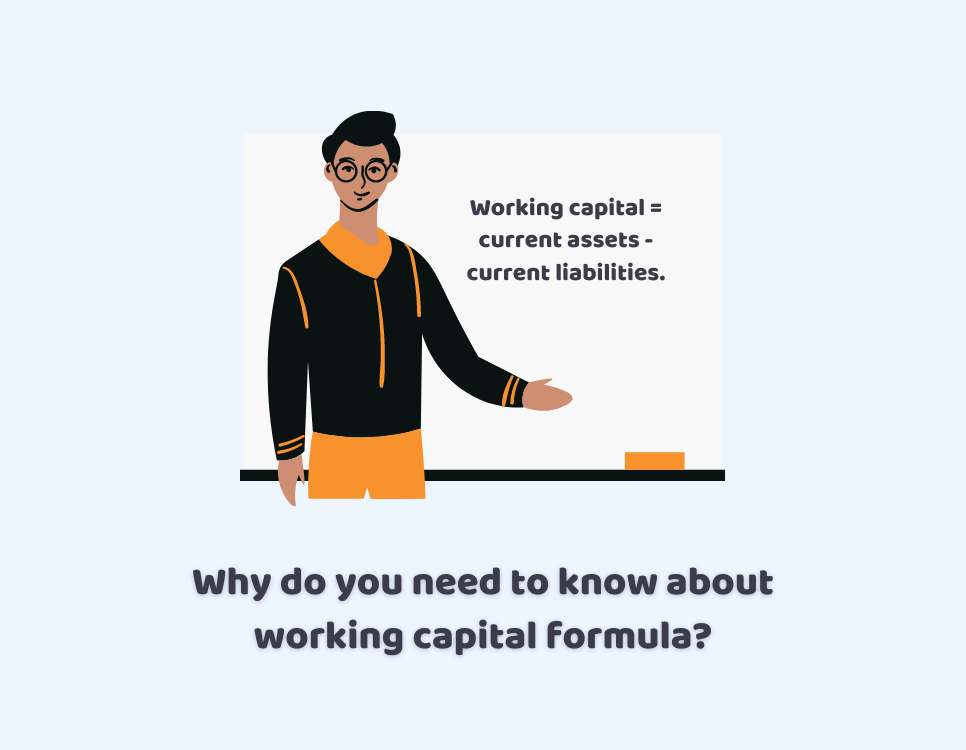
Do you want to measure the financial health and success of your business? Though you can get a fair view of your success through your customer base and profit, however, that’s not enough, there are numerous ways beyond. Along with other indicators, the working capital can let you know about your business standing and what finances it needs to meet its daily expenses. If you are running a business or willing to start one, you must know what you need to keep it afloat. Therefore, you need to have a good grasp of the working capital formula to rock in the business world. Let’s kick off with what is working capital. What is Working Capital? Working capital predicts the health of a business and provides information on funds that are needed to meet its day-to-day financial obligations. This information is necessary for the regular working operations of the business, that includes: Payment of salaries Reimbursement of suppliers Restocking products Office/factory maintenance Looking for a qualified accountant, bookkeeper or tax expert? Get in touch with us right now! What is Working Capital Formula? If you want to measure the short term financial health of a business, you need to use the working capital formula. It lets you know whether you have sufficient money to fulfil your financial responsibilities in the short run. To calculate use the following formula: Working capital = current assets – current liabilities. Current assets are the cash that you receive from sales. On the other hand, the money you are spending on expenses like IT etc are current liabilities. As your business needs regular cash to meet its day-to-day expenses and unexpected costs. A poor cash flow can’t cover that cost, which ultimately leads to the failure of a business. Besides, you need a great amount of working capital to face any emergency. This formula keeps you up to date about your cash flow situation for management accounts. If you have positive working capital, it implies that you can easily pay off your short-term liabilities. Conversely, a negative working capital indicates that you’re not in a condition to meet your debts. Consequently, it leads to cash flow problems that are the main causes of business bankruptcy, therefore it’s crucial to understand and monitor. Be worry-free about your business finances by getting in touch with CruseBurke! How to work out the working capital ratio? The working capital ratio indicates how frequently your business can pay off its current liabilities by using its current assets. If this ratio is less than one, there are more chances of financial difficulties. You can calculate it by: Working capital ratio = current assets/current liabilities Working Capital Requirement Startups often find it difficult to determine how much working capital they need at the beginning. As it is difficult to identify as it never remains constant and fluctuates regularly. Many businesses spend costs to provide resources for the production and delivery of their products and services. This happens as suppliers are needed to be paid before the reimbursement by your customers. For instance, the house builder needs materials like blocks, bricks, doors etc to build homes to sell. This cycle is called the cash flow cycle or operating cycle. You need to bear in your mind that, your funding requirements are dependent on the length of the cash flow cycle. It shows: Time for the production and provision of your products or services Duration of preparing and sending invoices for products or services Time required to get paid by the customers The working capital is essential to cover this time delay. As the longer the cash flow cycle, the more capital you need. Fo this reason, it’s imperative to put payment collection policies in place to ensure you’re reimbursed by the customers quickly. Quick Sum Up So, with the help of the working capital formula, you can better manage your cash flow. But, you need to track it on a weekly or monthly basis to know how and when you need funding to fulfil your business needs. Moreover, you also need to keep track of your quarterly VAT and corporation tax. These will be in separate saving accounts so that you don’t see them as spending money. An accurate and up to date cash flow forecast will let you know what’s happening with your working capital. Finally, with this, you can make better business decisions for its long-term success. Neet someone to manage the cash flow of your business? CruseBurke has a team of experts for your help, Contact us anytime, we’ll get back to you in the shortest time possible! For a customised package, Get an instant quote right away! Disclaimer: This blog is just for general information on working capital.

Read more