News,May 2018

What is Cash Basis

What is Cash Basis Accounting in the UK?

09/11/2021Accountants , Accounting , Business

Wondering what is cash basis accounting? It is an accounting method that you need to know as a small business owner in the UK, as it is well suited for non-complicated business setups. It is a simple way to manage your finances than traditional accounting. If you’re a sole trader or a partnership business, cash basis accounting can be an effective way to manage your finances. Let’s see: what is cash basis accounting, who needs to use it, why use this accounting method and what is traditional accounting! Our accountants at CruseBurke are qualified and cost-effective! We save your time, money, and stress by handling all your finances and business problems in no time! So, allow us to do this at an affordable package!      What is Cash Basis Accounting? It is an accounting method used by businesses to calculate their profit based on the money that actually comes in and goes out of your business on a specific date or on which expenses were paid out. It is a simplified accounting method suited for small businesses. Here, the income and expenses are recorded into the accounts only when the money is received and paid out. So it means when a business acquires equipment or land and paid out, it will then be included as an expense. On the other hand, when a business performs a credit transaction, this will only be included if the money is actually paid or received. A business owner should select cash basis accounting on the Self-Assessment Section of the Tax Return. Let’s see whether you need to choose this accounting method. Who Needs to Use Cash Base Accounting? As a general rule of thumb, you need to use cash base accounting if: You’re self-employed, a partnership or a sole trader with an annual turnover below £150,000 However, if you earned more in a year, you can use this method up to a turnover of £300,000 a year. If it goes above this, you need to consider traditional accounting (for your next tax return). Know that limited companies and limited liability partnerships (LLPs) are not eligible to use cash base accounting. And there are some other businesses too that can’t use this method. Why Use Cash Basis Accounting? Cash basis accounting is suitable for some small businesses. Those businesses that do not perform transactions on credit can use this method to evaluate their financial performance. You need to use cash basis accounting if: You’re sole proprietorship or partnership You use simple single-entry accounting (instead of double-entry accounting) The business does not deliver goods and services on a credit There are few financial transactions each day Your business has only a few employees At the time of sale, the customer pays by cash, credit/debit card, cheque or wire transfer The business has no inventory to be recorded or valued Understanding Traditional Accounting It is also called accrual basis accounting. Here, every single transaction is recorded, when an invoice is sent or received, no matter it is paid or not. This accounting practised is best suited for those who: Invoice customers High stock levels More staff Invoiced by suppliers Need to use Sideways Loss Relief Has turnover over £150K in a year Are complex business models like Limited companies or LLPs Quick Sum Up To sum up the discussion of what is cash basis accounting, you have now come to know that it is ideal for simpler, and smaller businesses that don’t receive or pay a large sum of money. You can register it in your Self-Assessment Tax Return. So, this is a preferable method for sole traders, self-employed, partnerships and small businesses with a turnover below £150K in a year. On the flip side, large businesses, limited companies and LLPs should choose the traditional accounting method to manage their finances effectively. You can get in touch with our accountants to help you with both accounting methods. Talk to one of our chartered accountants in Croydon about the online accountancy services we provide. We are just a click away! We provide accounting, payroll, and taxation services in affordable packages! Feel free to contact us!  Disclaimer: This blog contains general information about Cash Basis Accounting.

Read more
Accountant's Certificate of Confirmation

What is Accountant’s Certificate of Confirmation?

04/11/2021Accountants , Accounting , self-employed accountant

An accountant’s certificate of confirmation is a letter issued by a certified accountant/accounting firm. This certificate acts as proof that the accounts of a person or business are handled by a professional accountant and are in order. It is used for various purposes it might be needed whilst opening a bank account, for getting a company loan and might be required by the home office for individuals applying under a 5-year route settlement in the UK to ascertain that taxes are paid and other funds are maintained in proper order. If you fail to submit this certificate, you might be unable to open a bank account, get a loan or your home office application might be rejected. Let’s delve deep into the details to avoid the pitfalls!   Talk to one of our chartered accountants about the online accountancy services we provide. If you are looking for this certificate, feel free to contact us!    Understanding Accountant’s Certificate of Confirmation It is a confirmation letter by an accounting firm or an accountant showing that the individual’s accounts are handled by a professional and are in order. To provide this certificate, the accountant or accounting firm should be a member of any one of the following:     Member of a recognised UK supervisory body AAPA (The Association of Authorised Public Accountants) AAT (The Association of Accounting Technicians) CIMA (The Chartered Institute of Management Accountants) AIA (The Association of International Accountants) CIPFA (The Chartered Institute of Public Finance & Accountancy) Member of the Institute of Financial Accountants Additionally, if your home office application shows that you’re earning income as a sole trader/self-employed or a partner, you might not need this certificate if: The franchise agreement is signed by both parties Your business is bound to produce annual audited accounts VAT registration certificates and VAT returns are provided by you The type of business you are carrying has the consent of the local authority   Importance of Accountant’s Certificate of Confirmation There are multiple reasons why you need this certificate. However, along with this document, there are some other documents too that you can get for your business in the UK serving the same purpose as this certificate. You need this certificate to: Get an account statement confirmed or for raising any business funds in the UK Get accurate information on your accounts to process any kind of application for your bank and other financial bodies Tackle issues related to different immigration/business visa types Ensure that you are not wasting money on a loan or credit card that has not been paid off completely in the past Claim a Basic Payment Plan (BPS) or obtain the rights, of an active farmer, you need this certificate   At CruseBurke, we have a team of skilled accountants who provide solutions to all your business problems! Reach out to us today!   How Much Would It Cost to Get an Accountant’s Certificate of Confirmation? It typically costs around £150-£1,500. This amount varies as per the qualification and expertise of your accountant or accounting firm. This document is mandatory in many instances, especially in immigration and if you lack it, your application might be rejected.   Quick Sum Up To sum up the discussion, we hope that you have a better understanding of the accountant’s certificate of confirmation. In conclusion, we can say that this certificate holds significant importance when it comes to applying for a 5-year route settlement in the UK as per the immigration rules. It is also necessary to process different dealing with banks and financial bodies. In addition, you need this certificate for many other purposes.   We are a team of professionals offering accounting, tax, payroll and other financial services to freelancers, landlords and SME’s at a competitive price. Reach us now to save your time and grow your business like never before!   Disclaimer: This article intends to provide general information on the accountant’s certificate of confirmation.

Read more
Chart of Accounts

Chart of Accounts – A Basic Guide!

21/10/2021Accounting , Business , Limited Company

You are required to set up the chart of accounts (COA) in case you are taking over bookkeeping in your new company. If you do it rightly, your other tasks will be too easier to manage. The foundation of accounting is bookkeeping, and the initial step to managing your accounts correctly is “setting up the chart of accounts.” It may be challenging to keep a record of your business incomings and outgoings. But, it is important to understand the basics of COA for those who want to know their cash flow and the overall financial position of their company. Therefore, this blog will let you know about COA, its structure, and its importance. So, let’s explore the details! At CruseBurke, we have a team of limited company accountants to prepare and file your company’s accounts at a reasonable rate. Reach out to us now! What is a Chart of Accounts? The COA contains the list of the company’s financial accounts in the general ledger of your company. It permits you to divide all your business transactions made during a particular time into various subcategories. A COA permits you to get an insight into your business’s different areas by separating your income, expenses, assets, and liabilities that are shown in the following infographics.   What is the Structure of COA? The list splits all the company accounts by the following: Where do the accounts belong either in equity, assets, or liabilities What financial statement do the accounts go to, either in BS (balance sheet) or income statement? In order to meet the certain needs of your company, this can be further subdivided. The following is included in the charts of accounts: Company Assets: The company assets can consist of the following: Allowance for doubtful accounts Petty cash Accounts receivable Marketable securities Cash Prepaid expenses Accumulated depreciation, etc. Inventory Fixed assets Company Liabilities: The company liabilities may include the following: Accounts payable Taxes payable Notes payable, etc. Accrued liabilities Wages payable Shareholders’ Equity: The equity of a shareholder include: Capital (cash invested by the owner in the company) Drawings ( cash withdrawn by the owner for personal use) Company Income/Revenue: The following can be included in the revenue of the company: 1. Income/Revenue 2. Sales returns and allowances Company Expenses: The following can be included in company expenses. COGS (Costs of goods sold) Depreciation Payroll tax Supplies Utilities, etc. Bank fees Advertising Rent Wages Don’t have the time to manage your business finances! Be worry-free and rely on CruseBurke to handle your business finances in the best possible way.  An Example of a Chart of Accounts The following partial listing represents the distribution of accounts in a COA. The gap between the account numbers allows for future accounts additions.   How is a COA Used in an Accounting Software? An accounting software deals with the five core accounts (assets, liabilities, equity, revenue, and expenses). They are similar for every company. However, the categories that comes below them in a COA can be customised to fit your company.  For instance, for sales revenue, you can create many accounts. One for every area you deal in, or one for each company department. Your accounting software can ask you where to record the opposing credit or debit at the time of entering any transaction into it. You can also instruct the software to make the opposing entry for you, automatically. How to Deal with a COA? The following are the tips to deal with a chart of accounts. Make changes timely – It is better to make changes at the end of the accounting year, as adding accounts is easy at any time, but deleting any creates problems. Keep the COA consistent – Try to consider the comprehensive COA’ structure for your new business in order to keep your accounts organised, right from the start. This will help you to compare the accounting date for the future. Go on optimising your COA – Don’t be afraid to fix the structure of your COA, if it has become inconvenient. And for better bookkeeping, you are required to add other types of accounts. Quick Sum Up We hope now you have understood what is a chart of accounts, its structure, and how to deal with it. We would sum up our discussion by saying that it is essential to know COA basics for those who are setting up a new business. This is because managing your company accounts well can grow your business. Therefore, it is preferable to consult a skilled accountant to set up your COA for your new company. Unable to set up a chart of accounts for your new business? Let us handle this! We are skilled chartered accounts that can manage your business accounts in no time, at an affordable price, and we’ll grow your business like never before! So, contact us right away! Disclaimer: This blog contains general information on a COA.

Read more
financial accounting and managerial accounting

Financial Accounting Vs Managerial Accounting: What’s the Difference

27/09/2021Accountants , Accounting , Business

Accounting data is collected in financial accounting to generate financial statements. Managerial accounting, on the other hand, is an internal accounting method that is utilised to account for all company transactions. This is the key distinction between financial accounting and managerial accounting. This blog will let you know about the differences between these two types of business accounting. Our accountants at CruseBurke are qualified and cost-effective! We save your time, money, and stress by handling all your finances and business problems in no time! So, allow us to do this at an affordable package!      What is Financial Accounting? Financial accounting is an accounting term that refers to the summarisation, recording, and reporting of the financial information of a company. Financial accountants keep track of a company’s internal and external expenditures. They’re also in charge of preparing and submitting financial statements. They give precise data to the company management, as well as persons from outside the company, such as investors, tax officials, shareholders, and business regulators. This information may be trusted because it is accurate in every way. The primary focus of financial accounting is to provide financial information to the external users. So, financial statements are necessary to be prepared, and financial information should be presented according to the accounting rules. What is Managerial Accounting? This type of business accounting is mainly prepared for internal users, such as the company’s management or directors. Its major function is to prepare accounts that assist managers and directors in controlling the company’s activities and making decisions. Managerial accounts are not mandatory, so, they can be prepared and presented in any format that is acceptable for the entire management team. Furthermore, management accounts are prepared only when they are required. Differences Between Financial Accounting and Managerial Accounting The differences between financial accounting and managerial accounting are shown in the following categories. 1) Nature Managerial accounting is used to provide forecasts for the future. Financial accounting, on the other hand, is historically oriented because it must look back in order to assess the previously obtained financial results. 2) Systems Financial accounting is only concerned with maximising profits. It does not care about the company’s entire operating system. Managerial accounting, in contrast, searches for bottleneck activities and looks into alternative strategies to increase profitability by minimising bottleneck issues. 3) Timing Financial statements can be submitted until the end of each accounting period. Managerial reports, in comparison, maybe delivered more regularly to provide timely information to directors or management so that they can make decisions. 4) Reporting Focus Financial accounting’s purpose is to produce financial statements that may be shared with internal and external stakeholders, as well as the general public. While managerial accounting is concerned with operational reports that can be shared with internal users. Conclusion We hope now you will be able to better comprehend the differences between financial accounting and managerial accounting. So, to summarise our blog, we can say that financial accounting provides a company’s current financial status as well as historical data to a wide range of users. Managerial accounting, in contrast, provides forecasts for the future. It focuses on providing confidential information in order to make decisions that will affect future operations. Talk to one of our chartered accountants in Croydon about the online accountancy services we provide. We are just a click away! We provide accounting, payroll, and taxation services in affordable packages! Feel free to contact us!  Disclaimer: This blog contains general information about financial accounting and managerial accounting.

Read more
What is Equity

What is Equity? Definition, Formula & Importance

20/09/2021Accounting , Business , Finance , Limited Company

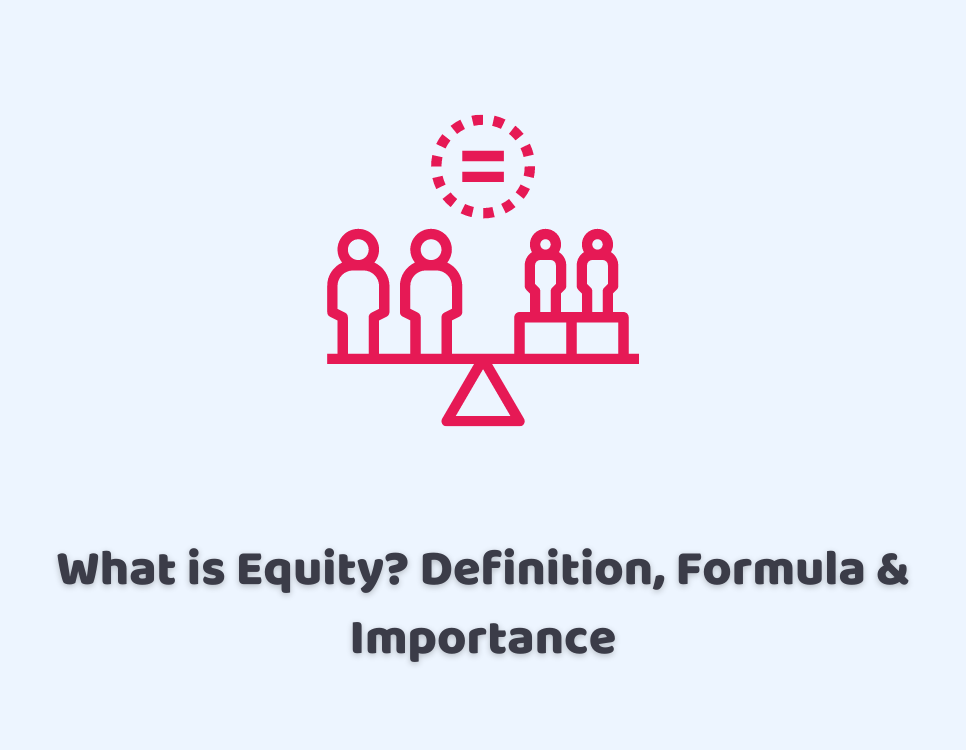
A company balance sheet contains the term “equity.” But this term is also common in personal finances, accounting, and amongst investors. This blog will inform you about what is equity, its different forms, and why it is essential for businesses and shareholders?  So, let’s start to explore more!   Our accountants at CruseBurke are qualified and cost-effective! We save your time, money, and stress by handling all your finances and business problems in no time! So, allow us to do this at an affordable package!    What is Equity? The amount of money that can be returned to the shareholders of a company at the time when all the assets are liquidated, and all the debts of a company are paid off is known as equity. In a publicly listed company, equity belongs to every shareholder, and if the company is limited, it belongs to the owner(s).   What are Different Types of Equity? A degree of ownership found in any asset after subtracting all the liabilities is generally known as equity. Following are its different types: Private Equity – It is any stock or additional securities that shows ownership in a limited company. Stockholders’ Equity – It is the number of funds that are contributed by the shareholders (including profits or losses) on all company balance sheets. Ownership Equity – It is the amount of money that remains after paying all the debts to its creditors by a company (when it is proclaimed bankrupt and goes into liquidation).   How to Work Out Equity? The utilisation of shareholder equity usually occurs in the balance sheet and accounting, such as Total Liabilities + Shareholder’s Equity = Total Assets The analyst often utilises equity to determine the financial position of a company. You can rearrange the formula as mentioned earlier to calculate the equity. Shareholder’s Equity = Total Assets – Total Liabilities   Unable to calculate equity? Let us handle this!   Why is Equity Essential for Businesses? Equity is the most valuable bit of a business that is remained from the total assets once all the liabilities are subtracted. A business is considered more valuable if it contains more equity. They can often use this as leverage for investment. You also possess equity and a share of the profits when you possess shares in a business. It means that if your business performs well, your profits increase, and so does the value of equity. So, a private company that needs to raise funds can consider selling shares (equities) within the company.   What are the Equity Risks for Businesses and Shareholders? Some equity risks are involved for both businesses and shareholders. Those risks are as follows: 1) Investing is a Risk  Purchasing shares in exchange for equity involves risk, like any investment. The businesses may not perform as they planned; therefore, the equity’s value may decrease. 2) It Changes the Business The selling of equities (shares) means that the original owner (s) of a company must share the profits with other shareholders. It also means that the ownership of a company is shared too. For example, if you as a business owner want to sell your business equity (share), the other shareholders also have to agree to this. Therefore, sharing ownership can make it more complex to make changes or decisions in the future.   Conclusion We hope now you have understood the basic concept of what is equity and why it is essential for businesses and shareholders. Equity is important as it represents a company’s financial position, and a business is considered more valuable if it contains more equity. A company can sell the equity to raise its funds, but it must be aware of its risks.   Talk to one of our chartered accountants in Croydon about the online accountancy services we provide. We are just a click away! If you are confused about selling equity, then feel free to contact us! We have the best solutions to all your business problems!   Disclaimer: This blog contains general information about what is equity.

Read more
How to Work out Depreciation

What is Depreciation and How to work out Depreciation in the UK?

10/09/2021Accounting , Business , Limited Company

The value of the company’s assets, like machinery, computers, and office furniture, diminishes with time. Depreciation is an accounting term which means as an asset moves through its productive life, its value gradually decreases from the original price. This blog will inform you about what depreciation is, how to work out depreciation, and why it should be important to you as an owner of a business. So, let’s start! Feel free to contact our professionals if you are worried about calculating depreciation! We will work out your depreciation in no time and at a reasonable price! What is Depreciation? Depreciation is the process by which the value of your company’s assets decreases over time. As a result, depreciation affects the book value of your assets on the balance sheet. When an asset depreciates, you won’t be able to sell it for the original price. Moreover, because the business uses its value for sales and profit, depreciation is considered a day-to-day operating expenditure on the profit and loss sheet. A computer, for example, depreciates over time and eventually becomes unusable, reducing its original price to zero. What are Depreciable Assets? Depreciable assets are tangible assets that gradually deteriorate, decrease in value, or become useless over time by use and wear and tear. The term used for the diminishing value of intangible assets is known as amortisation. Fixed assets are classified into two categories: Tangible (Fixed Assets) – The assets that can be touched are tangible assets such as buildings, machinery, computers, cars, desks, etc. Intangible (Fixed Assets) – The assets that can not be touched are intangible assets such as Intellectual property, goodwill, software, copyright trademarks, patents, etc.  How Does Depreciation Apply in Accounting? Depreciation is a non-cash cost. It is categorised in the two following perspectives: Income Statement – The decrease in the original value of an asset is treated as an expense. Balance Sheet – Same as in the income statement, depreciation affects the book value of your assets.  How to work out Depreciation in the UK? You need to calculate depreciation to see how an asset’s value depreciates over time and how quickly this happens. There are many methods for calculating depreciation in the United Kingdom, such as: 1) Straight Line Method According to this method, the value of assets depreciates at the same rate every year until they become obsolete (useless). An asset with a three-year lifespan, for example, would lose one-third of its value each year. The formula of this method is as follows: Depreciation = Purchase Cost of Fixed Asset / Useful Life of Fixed Asset 2) Diminishing Value Depreciation The asset depreciates at a higher rate in the first few years under this method. And, over time, the rate of depreciation decreases. This formula can be used to compute depreciation using this method: Depreciation = Purchase Cost of Fixed Assets * Reducing Balance Percentage / Projected Lifespan In Years 3) Units of Production Depreciation Some products have a longer lifespan when measured in terms of their work rather than their time. An automobile, for example, may operate for a certain miles, or a packing machine may pack a given number of products. Therefore, rather than being depreciable based on their age, these assets are depreciable based on their functioning capabilities. Depreciation = (Cost – Residual/Salvage Value) * (Number Of Units Produced / Life In A Number Of Units) Depreciation vs Capital Allowances (UK Tax Treatment) In accounting, depreciation is the process of spreading the cost of a fixed asset—such as machinery, vehicles, or office equipment—over its useful life. This helps present a more accurate view of profit in the financial statements. However, HMRC does not allow depreciation as a tax-deductible expense. When preparing your company’s Corporation Tax return, any depreciation charged in the accounts must be added back to your profits. Instead, tax relief on qualifying capital expenditure is provided through capital allowances. These are specific deductions that reduce your taxable profits, and they follow rules set out by HMRC. Main Types of Capital Allowances (2025/26) Annual Investment Allowance (AIA): Gives 100% tax relief on qualifying plant and machinery purchases, up to £1 million per year. Full Expensing – Available until at least March 2026, allowing companies to claim a 100% first-year deduction for most new plant and machinery. Writing-Down Allowances (WDA): Apply when expenditure exceeds the AIA limit or for certain assets that don’t qualify for full expensing. Rates are generally 18% (main pool) or 6% (special rate pool) per year. First-Year Allowances (FYA): Available for specific energy-efficient or environmentally beneficial assets. Depreciation for Small Businesses Depreciation will help you better understand your expenses and lower your tax bill ( which are positive outcomes). At first, it will appear to be complicated, but there’s not too much to worry about. Many businesses consider the schedule of depreciation, which is provided by HM Revenue & Customs. Once the depreciation is set in the accounting application (software), the calculation is performed automatically. An accountant or bookkeeper, as usual, can help you along the route. Final Thoughts We hope you now understand the basic information about what depreciation is, depreciable assets, how depreciation applies in accounting, and how to work out depreciation in the UK. This information will assist you in better understanding the worth of your assets, lower your tax burden, and increase your company’s value. Moreover, suppose you don’t want to work out manually. In that case, you can use your accounting software to implement HM Revenue & Customs’ depreciation schedule and submit accurate data immediately to your tax return. Are you looking for a tax accountant to file your tax return? Then contact our Chartered Accountants in Croydon! We provide the best payroll and taxation services at affordable prices! Disclaimer: This blog contains general information about depreciation.

Read more
High Net Worth Individuals

Financial Planning Tips for High Net Worth Individuals

09/09/2021Accounting , Business , Finance

The financial planning requirements of high net-worth individuals are different and more complicated than those of regular investors. HNWIs (High net-worth individuals) generally depend on the cash flow and persistent flow of revenue to cover future costs. In this blog, you will come to know about the financial planning tips for high-net-worth individuals to maintain their finances. Although earning more money and assets sounds good, managing it puts you in greater danger of financial difficulties. You must maintain a consistent cash flow from many sources of income. The more money you have, the more cautious you must be with your financial decisions. Are you looking for a professional to meet your accounting and taxation needs? Then at CruseBurke, we have a team of skilled accountants and tax experts who provide solutions to all your business problems! Financial Planning Tips for High-Net-Worth Individuals Following are the tips for high-net-worth individuals. 1. Consider Strategic Wealth Management As an HNWI, it’s crucial to work with a wealth manager who understands your current stage of life, financial goals, and risk appetite. Someone planning for early retirement or intergenerational wealth transfer will require different strategies from someone actively growing their wealth. In 2025, with updated rules around non-dom tax status, capital gains tax (CGT), and pension lifetime allowances, a strategic and tailored plan is more important than ever. A qualified advisor can help you structure your wealth efficiently using tools such as family investment companies, trusts, and tax-efficient pensions. 2. Risk Management High-net-worth individuals face increased exposure to legal, business, and market risks. In 2025, litigation, cyber security threats, and estate disputes remain some of the top concerns. Work with professionals to: Ensure you have adequate insurance cover Establish asset protection structures (e.g. trusts or holding companies) Regularly review your investment diversification Protect digital assets and online banking systems A solid risk management strategy helps preserve wealth and reduce exposure to unnecessary losses or legal complications. 3. Financial Plan as per your Financial Requirements HNWIs need a comprehensive financial plan tailored to their unique needs. In 2025, that means: Planning for inheritance tax (IHT) relief (especially after new HMRC guidelines) Maximising your ISA and pension allowances Reviewing your international holdings, especially if you’re impacted by post-Brexit or non-dom status reforms Begin by identifying your values and long-term goals. Whether you’re focused on legacy planning, philanthropy, or retirement income, your strategy should reflect your priorities. Partnering with a financial adviser or wealth management firm ensures your plan stays aligned with the latest financial, legal, and tax regulations. Final Thoughts We hope these financial planning tips for high-net-worth individuals prove to be beneficial for you. Many people believe that owning many homes and cars is a dream come true, but managing a high net worth can be complex. The wealth you’ve worked so hard for over the years can vanish in a short period in case you don’t have comprehensive and customised financial planning and asset management techniques. Therefore, consider these suggestions to protect your future and consider working with accountants and tax advisors to help you maintain your high net worth. Want expert guidance tailored to your accounting goals? Contact CruseBurke team of chartered accountants and tax planners for high-net-worth clients today. Disclaimer: This blog provides general tips for High Net Worth Individuals.

Read more