
The value of the company’s assets, like machinery, computers, and office furniture, diminishes with time. Depreciation is an accounting term which means as an asset moves through its productive life, its value gradually decreases from the original price. This blog will inform you about what depreciation is, how to work out depreciation, and why it should be important to you as an owner of a business. So, let’s start!
Feel free to contact our professionals if you are worried about calculating depreciation! We will work out your depreciation in no time and at a reasonable price!
What is Depreciation?
Depreciation is the process by which the value of your company’s assets decreases over time. As a result, depreciation affects the book value of your assets on the balance sheet. When an asset depreciates, you won’t be able to sell it for the original price. Moreover, because the business uses its value for sales and profit, depreciation is considered a day-to-day operating expenditure on the profit and loss sheet. A computer, for example, depreciates over time and eventually becomes unusable, reducing its original price to zero.
What are Depreciable Assets?
Depreciable assets are tangible assets that gradually deteriorate, decrease in value, or become useless over time by use and wear and tear. The term used for the diminishing value of intangible assets is known as amortisation. Fixed assets are classified into two categories:
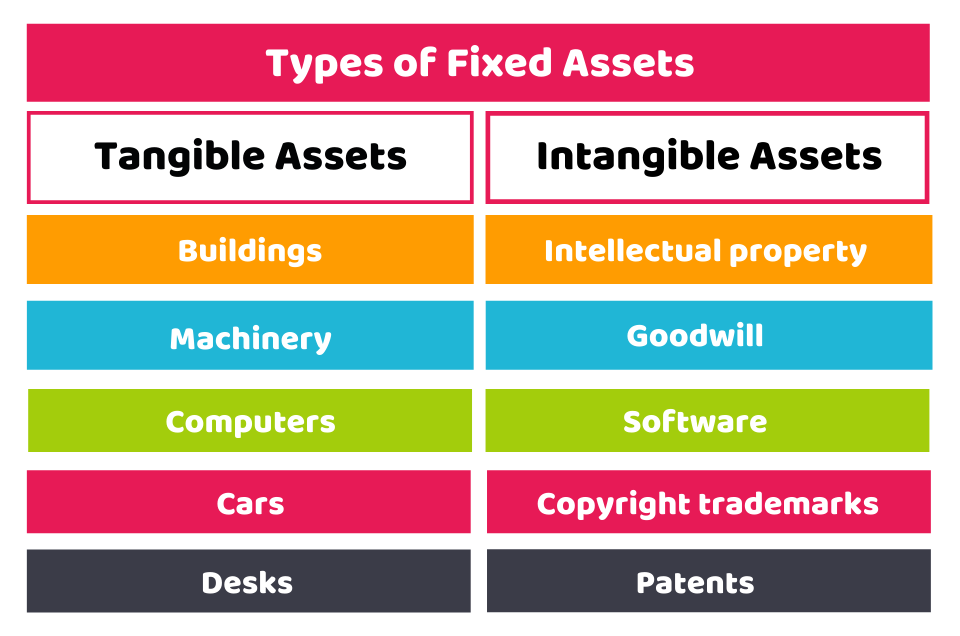
Tangible (Fixed Assets) – The assets that can be touched are tangible assets such as buildings, machinery, computers, cars, desks, etc.
Intangible (Fixed Assets) – The assets that can not be touched are intangible assets such as Intellectual property, goodwill, software, copyright trademarks, patents, etc.
How Does Depreciation Apply in Accounting?
Depreciation is a non-cash cost. It is categorised in the two following perspectives:
- Income Statement – The decrease in the original value of an asset is treated as an expense.
- Balance Sheet – Same as in the income statement, depreciation affects the book value of your assets.
How to work out Depreciation in the UK?
You need to calculate depreciation to see how an asset’s value depreciates over time and how quickly this happens. There are many methods for calculating depreciation in the United Kingdom, such as:
1) Straight Line Method
According to this method, the value of assets depreciates at the same rate every year until they become obsolete (useless). An asset with a three-year lifespan, for example, would lose one-third of its value each year. The formula of this method is as follows:
Depreciation = Purchase Cost of Fixed Asset / Useful Life of Fixed Asset
2) Diminishing Value Depreciation
The asset depreciates at a higher rate in the first few years under this method. And, over time, the rate of depreciation decreases. This formula can be used to compute depreciation using this method:
Depreciation = Purchase Cost of Fixed Assets * Reducing Balance Percentage / Projected Lifespan In Years
3) Units of Production Depreciation
Some products have a longer lifespan when measured in terms of their work rather than their time. An automobile, for example, may operate for a certain miles, or a packing machine may pack a given number of products. Therefore, rather than being depreciable based on their age, these assets are depreciable based on their functioning capabilities.
Depreciation = (Cost – Residual/Salvage Value) * (Number Of Units Produced / Life In A Number Of Units)
Depreciation vs Capital Allowances (UK Tax Treatment)
In accounting, depreciation is the process of spreading the cost of a fixed asset—such as machinery, vehicles, or office equipment—over its useful life. This helps present a more accurate view of profit in the financial statements.
However, HMRC does not allow depreciation as a tax-deductible expense. When preparing your company’s Corporation Tax return, any depreciation charged in the accounts must be added back to your profits.
Instead, tax relief on qualifying capital expenditure is provided through capital allowances. These are specific deductions that reduce your taxable profits, and they follow rules set out by HMRC.
Main Types of Capital Allowances (2025/26)
-
Annual Investment Allowance (AIA): Gives 100% tax relief on qualifying plant and machinery purchases, up to £1 million per year.
-
Full Expensing – Available until at least March 2026, allowing companies to claim a 100% first-year deduction for most new plant and machinery.
-
Writing-Down Allowances (WDA): Apply when expenditure exceeds the AIA limit or for certain assets that don’t qualify for full expensing. Rates are generally 18% (main pool) or 6% (special rate pool) per year.
-
First-Year Allowances (FYA): Available for specific energy-efficient or environmentally beneficial assets.
Depreciation for Small Businesses
Depreciation will help you better understand your expenses and lower your tax bill ( which are positive outcomes). At first, it will appear to be complicated, but there’s not too much to worry about. Many businesses consider the schedule of depreciation, which is provided by HM Revenue & Customs. Once the depreciation is set in the accounting application (software), the calculation is performed automatically. An accountant or bookkeeper, as usual, can help you along the route.
Final Thoughts
We hope you now understand the basic information about what depreciation is, depreciable assets, how depreciation applies in accounting, and how to work out depreciation in the UK. This information will assist you in better understanding the worth of your assets, lower your tax burden, and increase your company’s value. Moreover, suppose you don’t want to work out manually. In that case, you can use your accounting software to implement HM Revenue & Customs’ depreciation schedule and submit accurate data immediately to your tax return.
Are you looking for a tax accountant to file your tax return? Then contact our Chartered Accountants in Croydon! We provide the best payroll and taxation services at affordable prices!
Disclaimer: This blog contains general information about depreciation.
